Why Modern Businesses Are Moving From WordPress to React

Modern businesses are increasingly moving away from traditional website builders and monolithic CMS platforms in favor of modern frontend frameworks like React and Next.js. The shift isn't driven by developer preference — it's driven by measurable business outcomes: faster load times, better conversion rates, lower maintenance overhead, and a security posture that doesn't require constant plugin vigilance.
The Performance Problem With Traditional CMS Platforms

Plugin bloat is the original sin of traditional CMS-based websites. A WordPress site that starts with a clean install rapidly accumulates plugins for SEO, caching, forms, analytics, image optimization, security, backups, and e-commerce. Each plugin adds JavaScript to the front-end, adds database queries to every page load, and introduces a dependency that requires its own updates. The cumulative performance cost is enormous — and largely invisible until a Core Web Vitals audit reveals what visitors already knew from experience.
Performance issues compound as sites grow. A five-page CMS site may perform adequately despite its inefficiencies. A fifty-page site with a product catalog, multiple form types, and a live events section reveals every architectural weakness in the stack. Uncached database queries, unoptimized images served at full resolution, and synchronous JavaScript blocking page rendering are individually manageable problems — together, they produce the kind of PageSpeed scores that lose rankings and bookings simultaneously.
Maintenance complexity is a hidden tax on CMS-based businesses. Plugin updates that break theme compatibility, PHP version migrations that require testing across every plugin in the stack, security patches that arrive without warning and require immediate deployment — these are recurring costs that never appear in the initial purchase calculation but consume hours of developer time every month, indefinitely.
Security surface area in a traditional CMS is substantial. With WordPress powering 43% of the web, it is the most targeted platform for automated attacks — password sprays, plugin vulnerabilities, XML-RPC exploits, and database injection attempts run against WordPress installations continuously. Each plugin in the stack is another surface. Keeping every dependency patched is not optional — it is a constant operational requirement.
“Modern businesses need speed, scalability, and a digital foundation that grows with them — not one that accumulates complexity with every new requirement.”
Why React and Next.js Are Changing Modern Web Development

Hydration in Next.js means that pages are pre-rendered as static HTML — appearing instantly in the browser — and then enhanced with interactivity as JavaScript loads. The user sees a complete, styled, readable page immediately, rather than waiting for JavaScript to construct the DOM before any content is visible. For businesses competing in dense local markets, this initial display speed is the difference between a visitor who stays and one who bounces back to the search results.
Performance at the framework level means optimizations happen automatically. Next.js splits JavaScript bundles per page, so a visitor reading a blog post doesn't download the checkout code. Images are served in modern WebP format at the exact dimensions needed, lazy-loaded below the fold. Fonts are pre-loaded and subset to include only the characters used. These aren't configurations to enable — they're defaults.
SEO with Next.js is structurally superior to client-rendered React applications. With Static Site Generation, every page is a complete, indexable HTML document at the time of the initial request — no crawler waiting for JavaScript to execute. Metadata, canonical URLs, Open Graph tags, and structured data are all rendered server-side. For local businesses competing in organic search, this architectural advantage translates directly into rankings.
Component architecture in React enables design systems that are structurally impossible in traditional template-based CMS themes. A button component defined once applies consistent behavior, appearance, and interaction states across every page. A card component is updated in one file and updated everywhere it's used. This is the technical foundation that enables premium themes to maintain visual consistency at scale.
Better Mobile Experiences Mean Better Conversions

Responsive UX in React-based themes is fundamentally different from the responsive afterthoughts common in CMS templates. Because components are built with responsive behavior as a first-class consideration — not added through media query overrides after the fact — mobile layouts feel like they were designed for mobile, not adapted from desktop. Touch targets are properly sized. Navigation is genuinely mobile-native. Images don't overflow their containers.
Conversion improvements from mobile optimization are directly measurable. Studies consistently show that mobile users who encounter a site load time above 3 seconds abandon at rates exceeding 50%. For every additional second of load time, conversions drop by approximately 4%. A Next.js site loading in under a second on mobile — which is achievable with proper static generation — can double conversion rates compared to a CMS site loading in 4–5 seconds on the same connection.
Cleaner interactions on React-based sites come from the component model itself. Hover states, focus states, loading states, and error states are defined once and applied consistently. There are no interaction inconsistencies between different plugins' implementations of the same UI pattern. The experience feels unified — and unified experiences convert better than fragmented ones.
Premium Themes Built for Modern Businesses
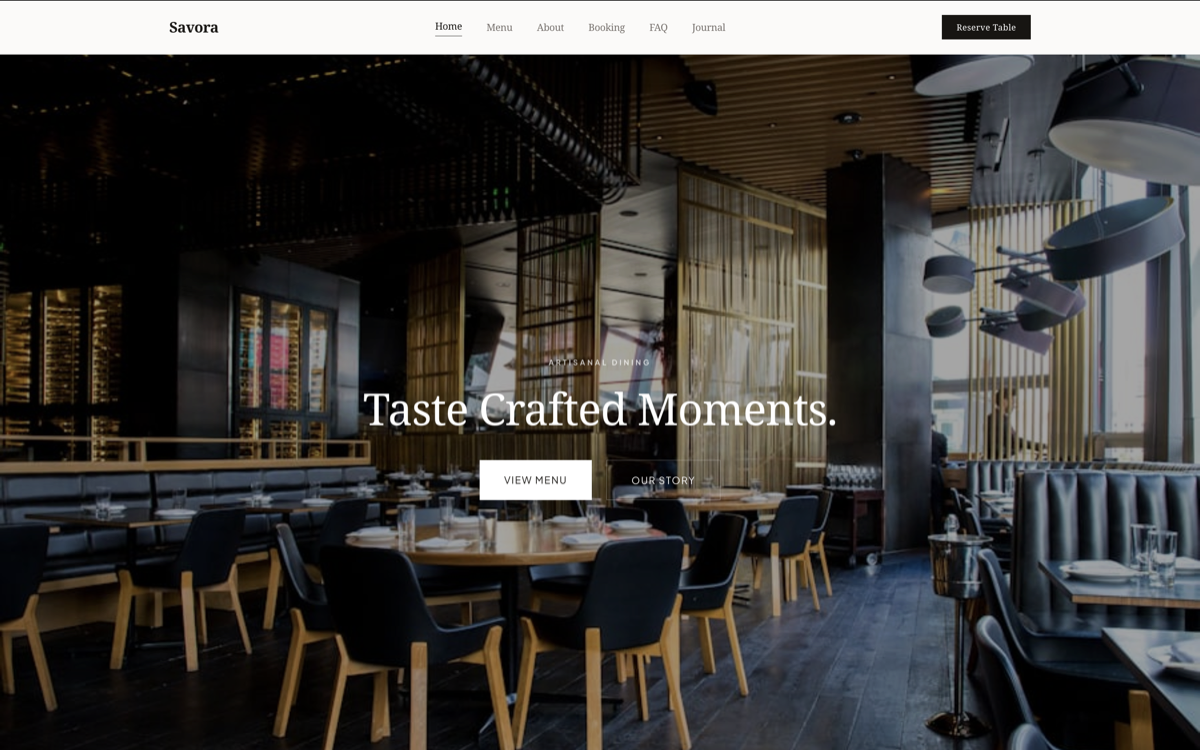
Savora, Lexora, and Movix are each built on the principle that premium design and technical excellence are inseparable. Savora delivers the visual sophistication of luxury hospitality with the technical performance of a modern Next.js application. Lexora brings professional credibility to agencies and consultancies without sacrificing the speed that determines organic search rankings. Movix combines kinetic creative energy with the code quality that keeps Core Web Vitals scores in the green.
Modern Stack Themes
Next.js themes ready to deploy
Every Layero theme is built on Next.js — static generation, automatic image optimization, and component architecture included. No plugins. No patch cycles. No technical debt.
BROWSE ALL THEMESarrow_forward